

When embarking on a software development project, there are often many unknowns: How should legacy software integrate with new solutions? What compliance issues need to be solved? How can technologies be best designed to fit or improve existing workflows? These are all questions that should have clear answers before starting the software development process.
Including a ‘discovery’ and project-planning phase into a healthcare software development project can be extremely beneficial. The best software developers can create a solution that meets best practices, but without discovery, they most likely won’t be able to deliver the specific needs of the client and their user base, and therefore won’t solve their problems.
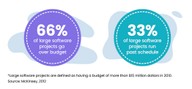
Further, a 2012 McKinsey report tells us that 45% of all IT projects (both software and non software) go over budget, while 7% go over schedule. These numbers are higher when looking at strictly software projects, with 66% of large software projects going over budget and 33% of large software projects running past schedule. Opting for a discovery phase can save healthcare organizations time, money, and frustration. But what is discovery and how does it work?
What Is Discovery and Project Planning?
Discovery and project planning, also referred to as ideation, prototyping, scoping, and proof of concept is a preliminary and preparatory phase to development. In this initial research and planning phase, detailed documentation on software integrations, feature definitions, user workflows, and platform architecture are developed, along with highly accurate cost and timeline estimates.
The three main goals of discovery and project planning are to:
- Create a detailed project roadmap
- Get a clear understanding of the costs, as well as the timeline, associated with the specific software development project
- Create a prototype (in complex cases)
Put simply, the outcome of the discovery and project planning phase is a detailed project roadmap for the creation of the software application that avoids pitfalls and mitigates risk.
How Do Discovery and Project Planning Work?
The discovery process at Medical Web Experts (MWE) is all about gaining a deeper understanding of the client’s needs and goals. Through close collaboration between the client and MWE’s senior-most technical, data security, scalability, and compliance experts, the project starts to take shape.
Over four to six weeks, senior executives and specialists from MWE’s team work closely with the client to clearly define:
- How users currently interact with your platform
- How you would like for users to interact with your platform
- Your users’ needs
- What features you need to meet your goals
- If you need to integrate a legacy system into your new digital health solution, and if so, the best way to interface with those systems
During this time, we prepare explanations, graphics, and diagrams that illustrate the current user experience of the application as well as a solution to achieve desired workflow.
At the end of discovery, clients are handed a clearly defined project scope that includes a detailed roadmap for software development, a cost estimate to within a very small (in most cases, less than 10%) margin of error, and a timeline for project completion. By involving legal, compliance, and security experts in the discovery phase, MWE identifies potential pitfalls that may arise later. When the formal development process kicks off, the client can be sure that their project is heading in the right direction, from technical, business, and compliance perspectives.